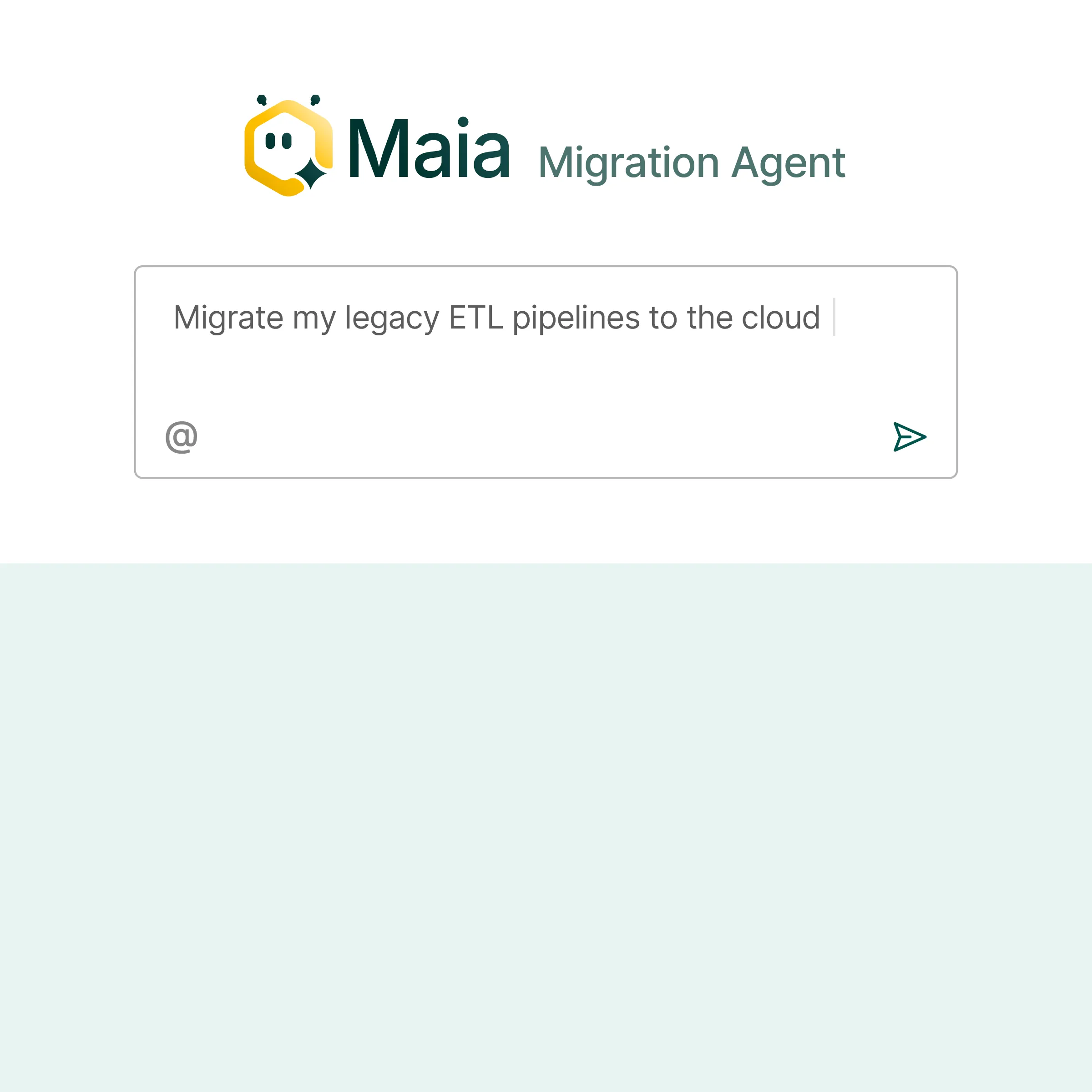
Legacy ETL is slow, expensive and hard to leave

Many enterprises know their legacy ETL platform is no longer fit for today’s demands. But replacing it feels just as risky as keeping it. Licensing and connector costs continue to rise. Specialist skills are hard to hire and expensive to retain. And manual rewrites make migration slow, disruptive, and uncertain.
Trusted by the world’s most ambitious data teams
EDF renewables logo
EDF renewables logo

The real cost of staying on legacy ETL

Most enterprises lose significant budget to "tool sprawl", a fragmented collection of overlapping monitoring, transformation, and ETL solutions that require constant reconciliation. This structural overhead forces teams to spend time troubleshooting failures across disconnected systems instead of delivering value.
Maia consolidates the stack. It unifies ingestion, transformation, and orchestration within a single governed platform. By standardizing workflows and sharing context, organizations can save 25-30% on software costs. The unified architecture also provides agentic AI with the visibility and control needed to operate at scale.

9 out of 10
hours of data engineering effort saved with Maia
$100-250k
saved on average per customer from cutting legacy tools
100x
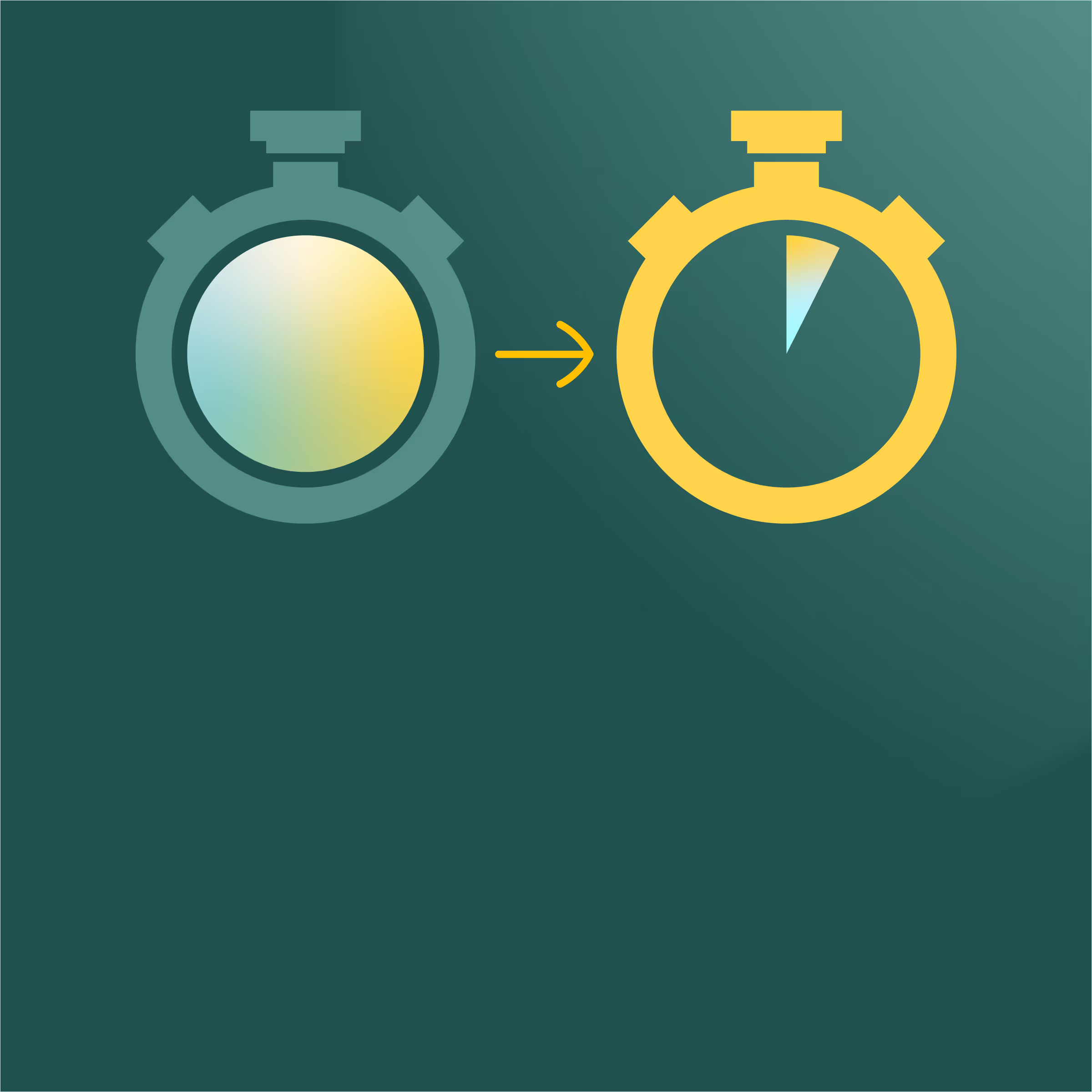
in throughput, meaning what used to take weeks now take hours

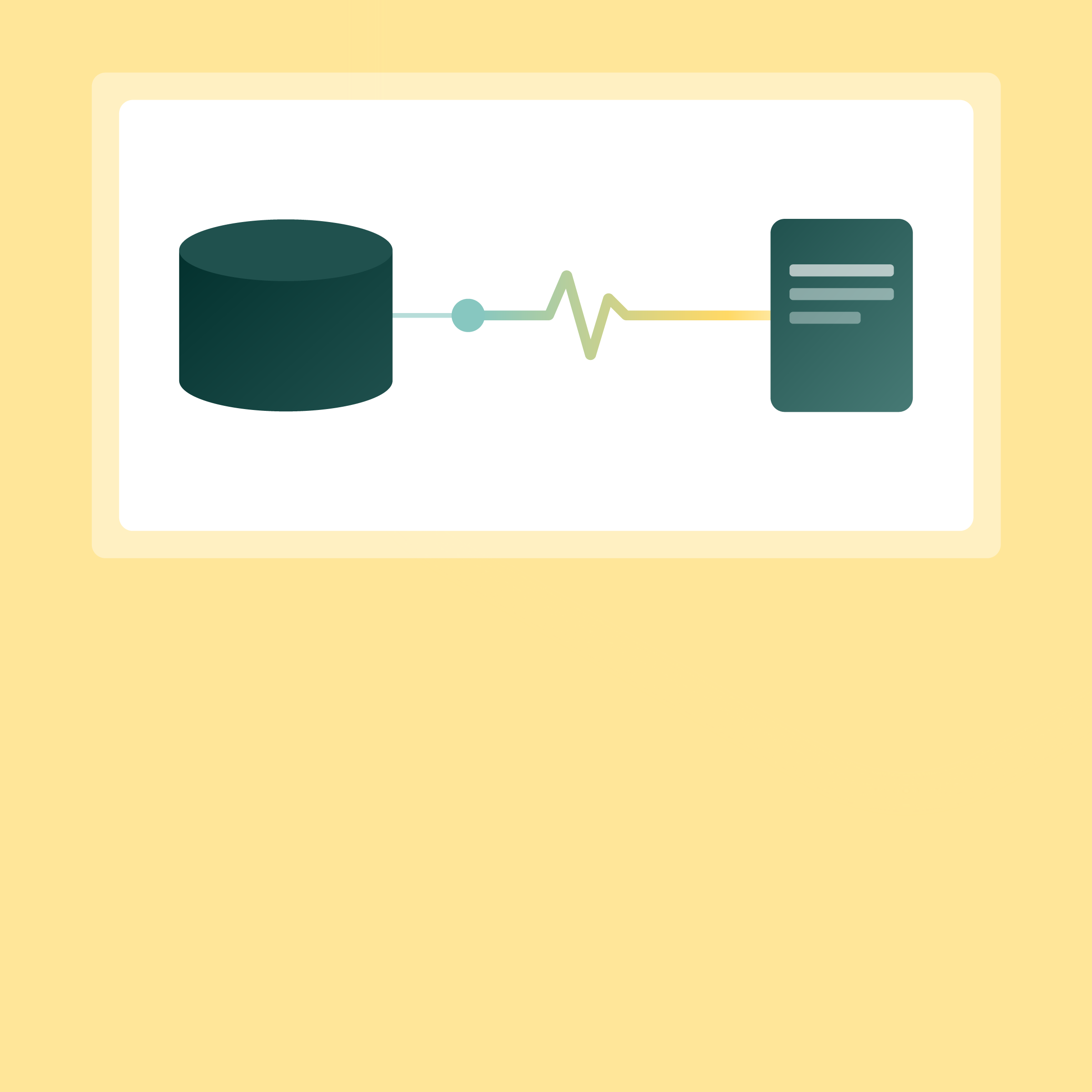
The unified architecture that makes automation viable

Maia isn't just another tool in the stack; it is the backbone where modern data operations converge. 
Integrated data platform
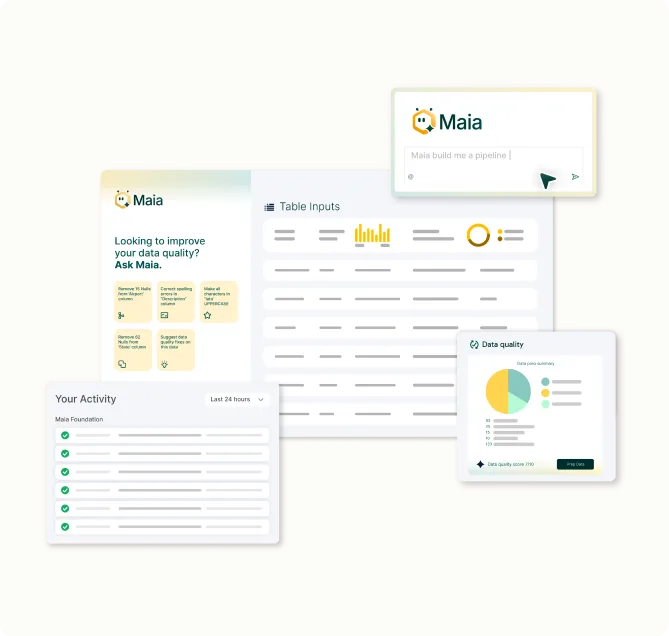
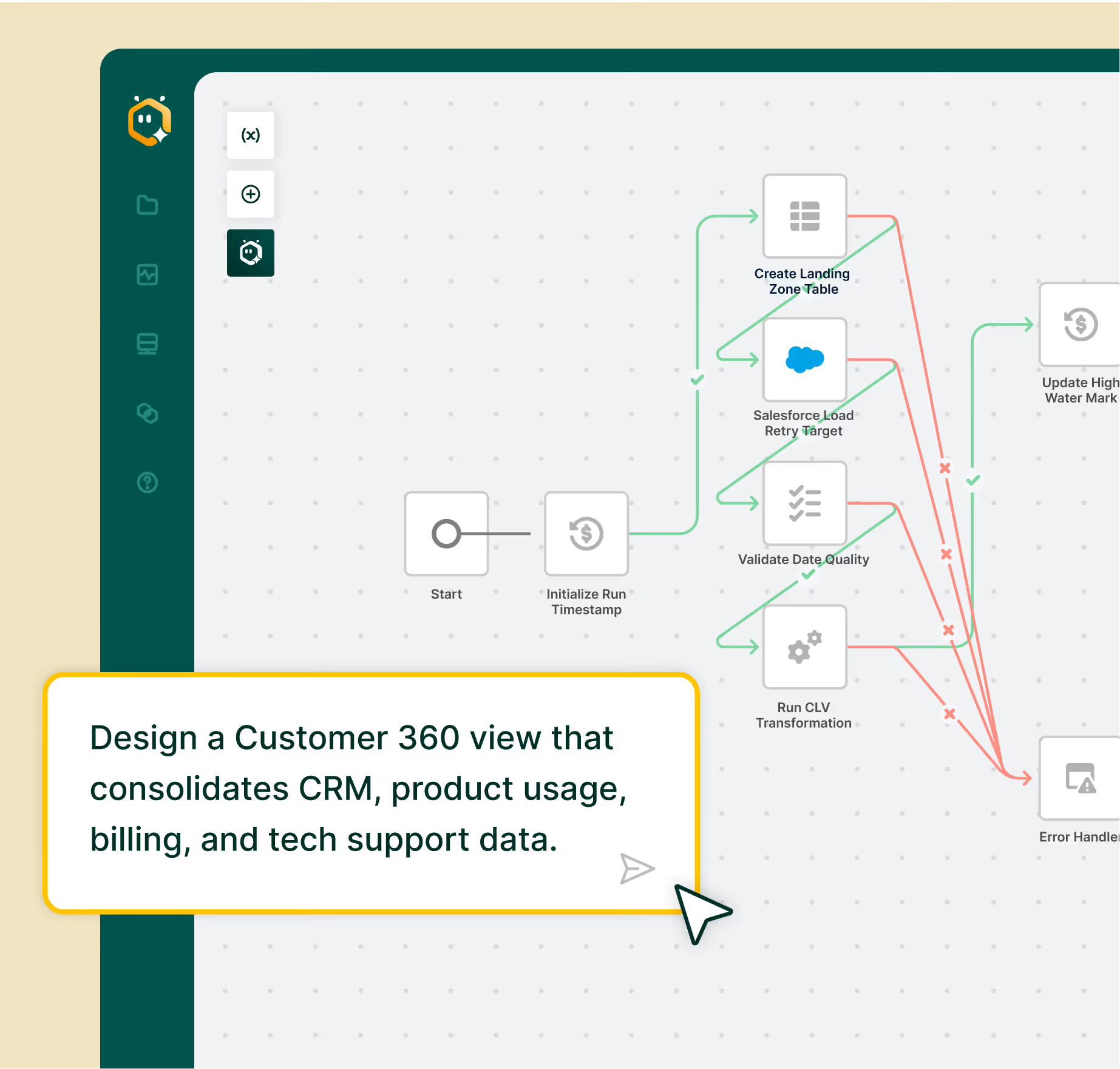
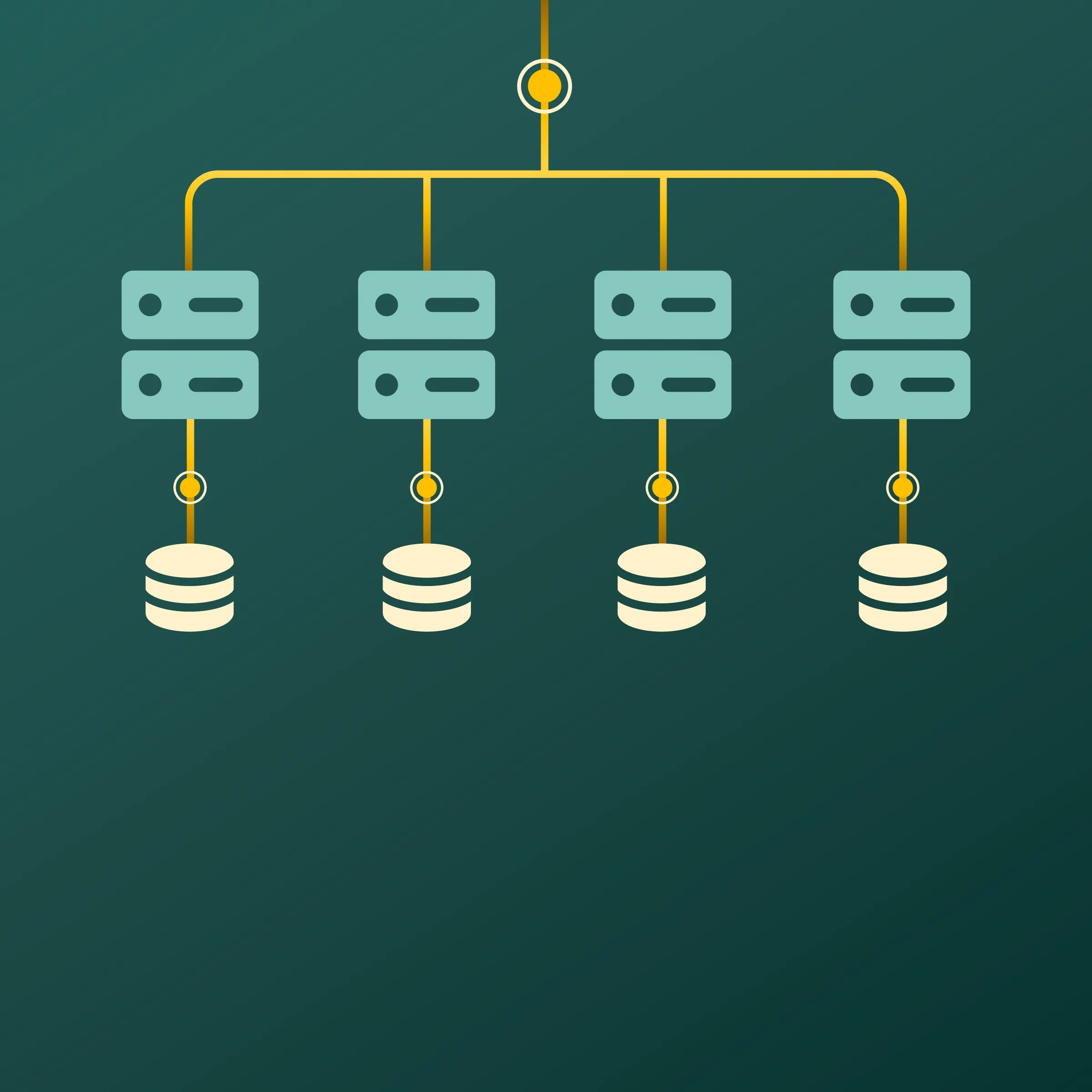
The platform provides 150+ prebuilt connectors for ingestion, low-code and pro-code pipeline development, and pushdown execution that runs natively in your cloud data platform (Snowflake, Databricks, Redshift). Git-based version control, CI/CD automation, and operational lineage tracking ensure every pipeline is auditable and reproducible.
Unified governance
Where fragmented tools create governance blind spots, Maia centralizes visibility. Role-based access controls, data residency enforcement, and SOC 2 compliance operate across all pipelines. Instead of chasing lineage through six different systems, you have one source of truth for metadata, execution history, and data flow.
AI-scale delivery
This unified architecture enables agentic AI to operate at enterprise scale. Maia Team doesn't guess about context or standards—it accesses the same governed metadata, execution logs, and business rules that human engineers use. Automation becomes reliable, not risky. Consolidation becomes the enabler of AI-scale data delivery, not just a cost-cutting exercise.
“Maia offers a glimpse into the future of data engineering.
“It’s intuitive, powerful, and feels like a real accelerant for how teams build with data. I’m excited about what this will unlock.”
Sridhar Ramaswamy
CEO at Snowflake

How consolidation accelerates in practice

Three steps to unified platform operations:
Audit and rationalize
Map your current tooling landscape to identify overlapping capabilities, redundant licenses, and integration complexity. Organizations typically discover 3-5 tools performing similar functions with inconsistent governance and hidden costs.
Migrate with automation
Map your current tooling landscape to identify overlapping capabilities, redundant licenses, and integration complexity. Organizations typically discover 3-5 tools performing similar functions with inconsistent governance and hidden costs.
Operate and scale
Map your current tooling landscape to identify overlapping capabilities, redundant licenses, and integration complexity. Organizations typically discover 3-5 tools performing similar functions with inconsistent governance and hidden costs.

Enterprise control meets AI velocity and scale

Maia Foundation operates with enterprise-grade governance built in: role-based access control, encryption at rest and in transit, data residency controls, and audit trails for every pipeline execution. SOC 2 compliance and pushdown architecture ensure data never leaves your cloud environment. As organizations scale from dozens to thousands of pipelines, governance remains consistent, lineage stays intact, and compliance audits become routine instead of painful. Consolidation doesn't weaken control—it strengthens it.

Ready to augment your data team with agentic AI?

See how your team gains the freedom to do more.