

.jpeg)

Data management
made effortless
Enjoy the freedom to do more with Maia on your side.

The content below comes from one of our valued implementation partners, LTM, a global technology consulting and digital solutions company with deep expertise in building enterprise data infrastructure. This article was authored by K. Koteswar Rao, Associate Principal in Data & Analytics at LTM, who brings 14 years of hands-on experience designing and scaling ETL/ELT solutions across modern cloud ecosystems.
What Koteswar describes here isn't theoretical. His team built a metadata-driven framework on top of Maia and validated 85–90% reductions in pipeline development time across multiple production deployments. We're publishing this because it shows, in precise technical detail, what's possible when you stop treating pipeline development as a coding exercise and start treating it as a configuration problem, one that Maia is built to solve. The views and implementation approach are those of LTM. The results speak for themselves.
We have redefined how data pipelines are designed and developed by combining metadata driven framework with Matillion’s Maia, the AI Data Automation platform, results in 85-90% reduction in development time.
Time savings are only the starting point. This framework fundamentally transforms how data engineering work is delivered by shifting teams away from repetitive, code-heavy development toward intelligent, configuration-driven pipeline creation.
With Maia embedded into the framework, even less technically intensive users can design pipelines, validate them before execution, and generate production-ready workflows automatically. Maia operates as an autonomous member of the data engineering team, generating production-ready pipelines, handling validation, and executing workflows without needing to hand off to a developer at every step.
As a result, organizations can scale faster, reduce dependency on highly specialized resources, and allow experienced engineers to focus on higher-value architectural design, optimization, and innovation initiatives rather than routine pipeline development.
What makes this different:
The Data Engineering Paradox
Every data team faces the same challenge: building pipelines is getting harder, not easier. More sources, more complexity, same timeline pressures.
Traditional approaches trap teams in repetitive work—building the same components, handling the same errors, maintaining fragmented code.
We took a different path:
The result: 85–90% time savings achieved by reorienting data engineering from low-level technical execution to business-driven pipeline design aligned with real enterprise outcomes.
This is that story.
Before the Framework
Typical Timeline for Building 10 Table Loads:
Pain Points:
Core Philosophy
"Configure once, reuse infinitely"
Instead of building pipelines component-by-component, developers simply:
What is a Metadata-Driven Framework?
A metadata-driven framework is a system where the logic and flow of data processing are dynamically guided by metadata rather than being hard-coded into the system.
The metadata typically includes information about:
With this approach, organizations can adapt ETL processes dynamically without rewriting code, making them highly scalable and maintainable.
Matillion offers several key features that enable you to build dynamic and adaptable solutions. By utilizing Maia, orchestration and transformation components, we can efficiently integrate, transform, and manage data based on metadata configurations.
Maia is an AI Data Automation platform that:
The framework has 3 layers:
To ensure seamless operation of the metadata-driven framework, all essential configuration and execution details are stored in dedicated Snowflake schemas:
CONFIGURATION
LOGGING

Figure 1: Matillion shared orchestration for database stage table load pipeline

Figure 2: Matillion shared orchestration for flatfile stage table load pipeline

Figure 3: Matillion shared pipelines for audit and component logging.
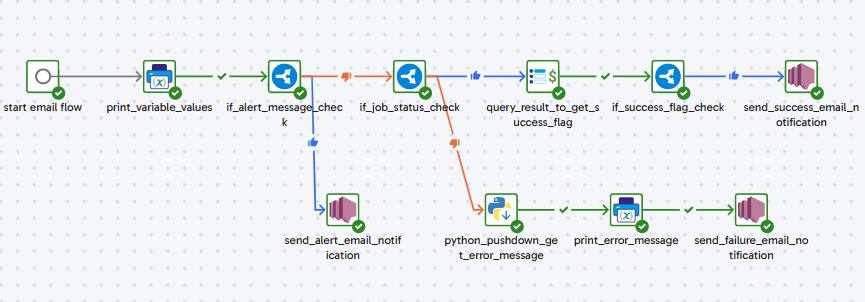
Figure 4: Matillion shared pipelines for email alert, success and failure email.
Layer 3: Parent pipelines (Domain-Specific)
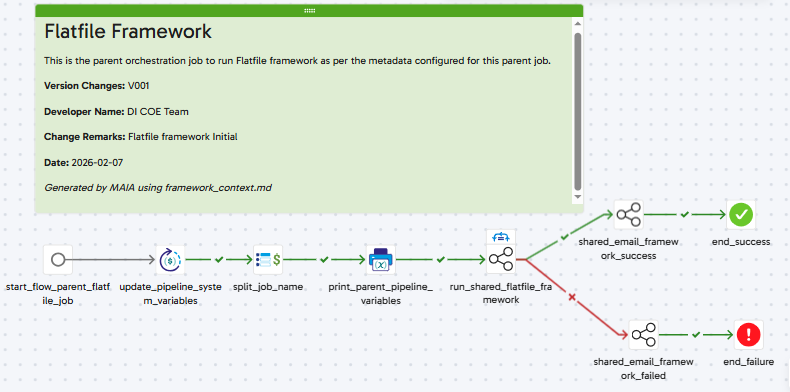
Figure 5: Matillion parent pipeline for flatfile framework generated by Maia.
Maia Integration: The Game Changer
How does Maia use the frameworks?
The Secret: FRAMEWORK_CONTEXT.md
Context files are markdown documents(.md) that teach Maia about the projects specific patterns, rules and conventions, for example framework approach followed.
Context files make it easy to embed teams knowledge, standards and best practices directly into every interaction with Maia. Instead of repeating requirement in every prompt, this information is stored as simple markdown files within the project.
We created a comprehensive framework context document in the project that tells Maia:
Maia reads this context and generates pipelines that follow your standards 100% of the time.
Using the framework with Maia
Prerequisites
One-Time Setup:
Open Maia chat in Matillion and use one of these prompts:
Prompt Categories:
Prompt 1.1: Framework Overview

Figure 6: Maia prompt for discovery and learning of metadata driven framework.
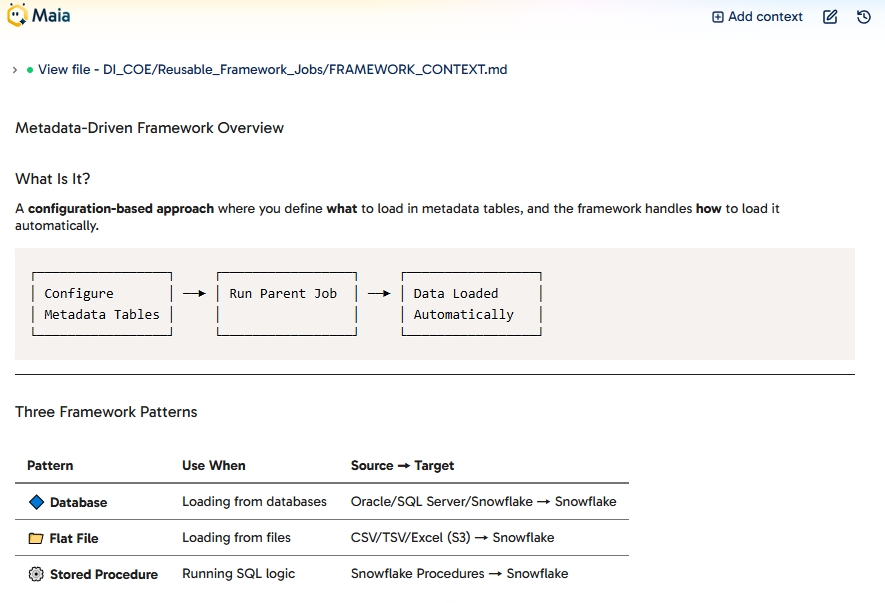
Figure 7: Maia response explaining the metadata driven framework and patterns.
Prompt 2.1: Parent pipeline Generation for stored procedure pattern


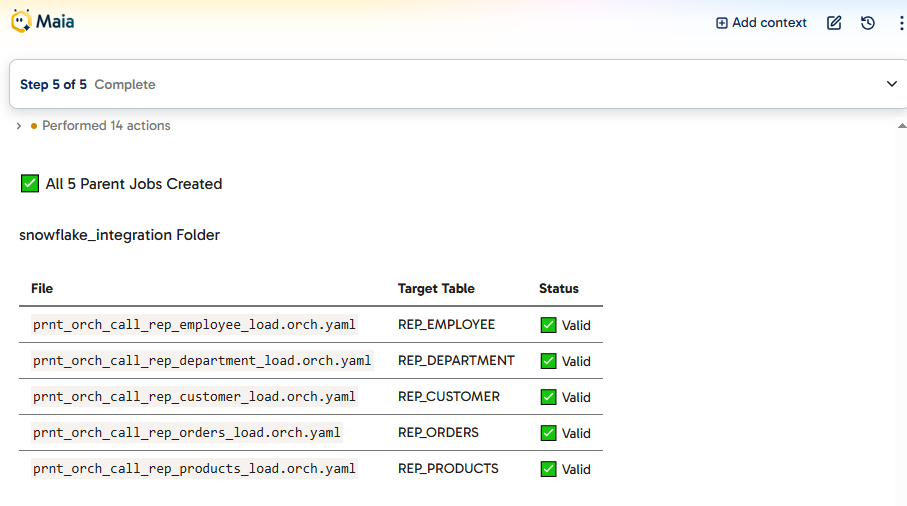
Figure 8: Maia response for the creation of folder and parent pipelines.
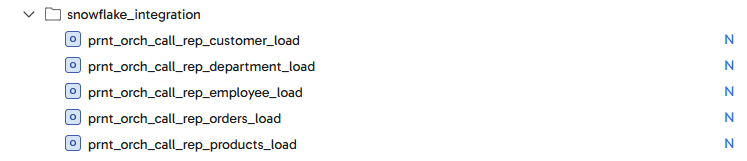
Figure 9: Folder and parent pipelines created by Maia in the Matillion project.

Figure 10: Parent pipeline generated by Maia using framework context.
Prompt 2.2 Execution of parent pipelines created by Maia and results.
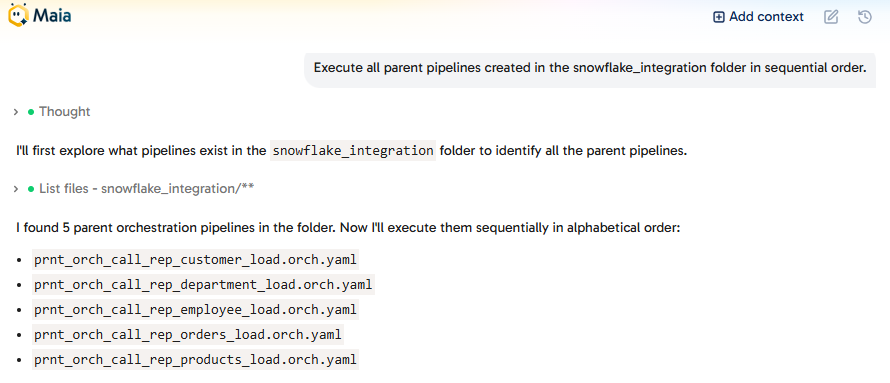
Figure 11: Maia prompt to execute the created parent pipelines sequentially.
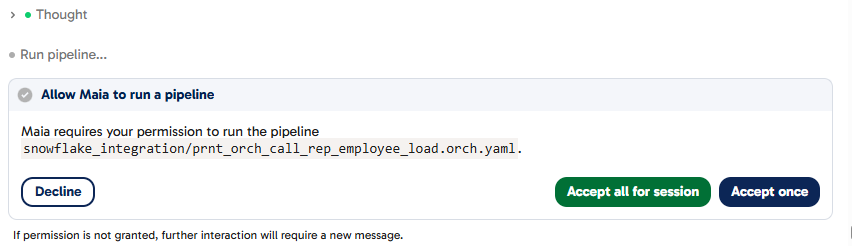
Figure 12: Maia asking confirmation to execute the pipelines.
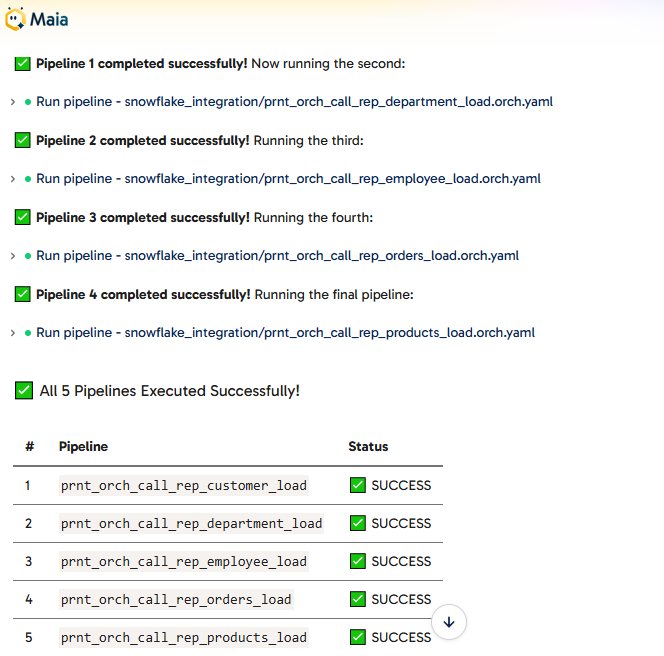
Figure 13: Execution results provided by Maia after the pipelines are completed.
Prompt 2.3: Creation of master pipeline with custom Requirements
Once the individual parent pipelines are created, asking Maia to create the main pipeline which can be scheduled with dependencies defined:

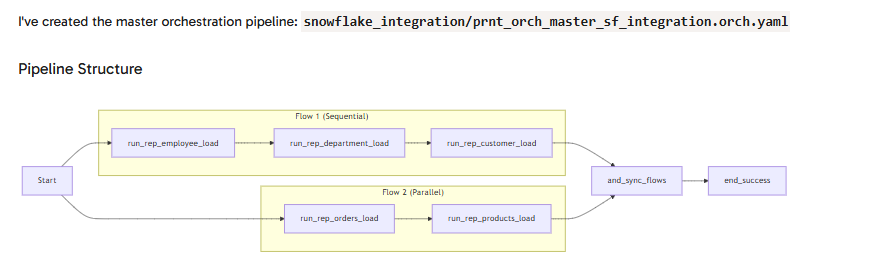
Figure 14: Maia prompt and result for creation of custom pipeline.
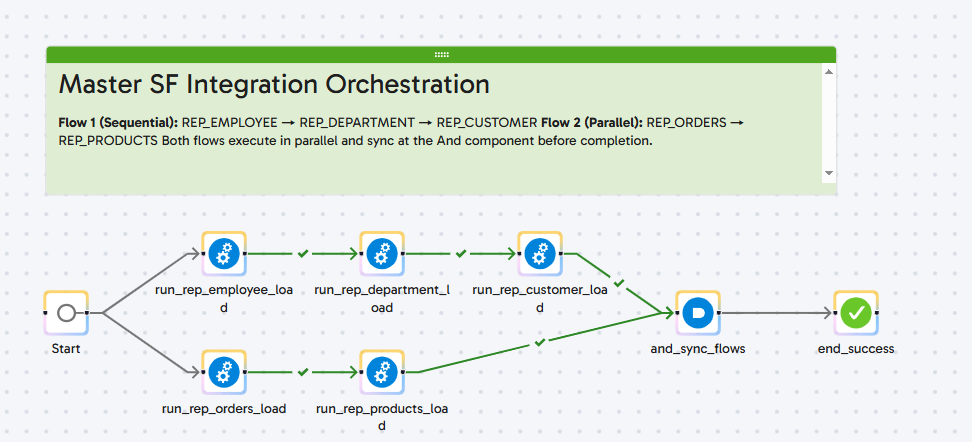
Figure 15: Custom master pipeline generated by Maia in Matillion project
Prompt 3.1: Asking for validation of metadata configured for new parent pipeline to be created.


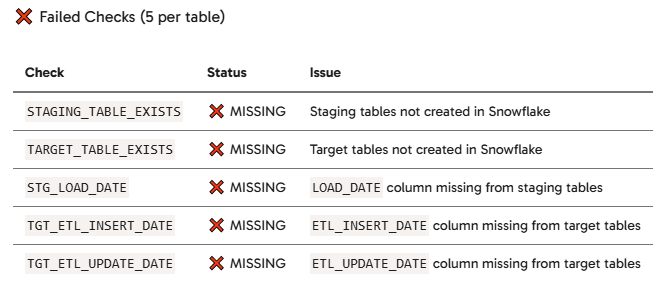
Figure 16: Maia prompt for validations defined in framework context and results.
Prompt 3.2: Revalidation of metadata after fixing the missing issue of snowflake required objects not existing as per the configured metadata.

Figure 17: Maia prompt for revalidations after creating the snowflake objects.
Prompt 3.3: Creation of flat file framework parent pipeline after validations are passed.
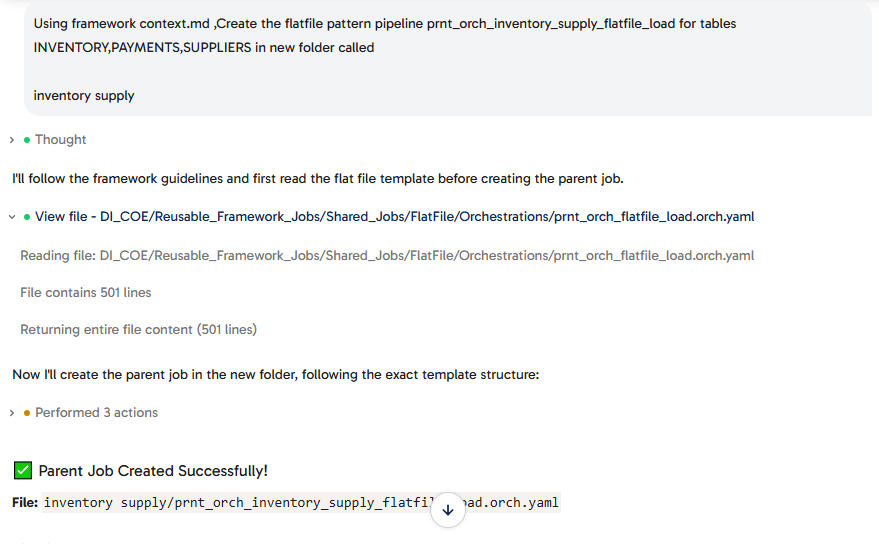
Figure 18: Maia prompt for creation of parent pipelines after all validations are passed.
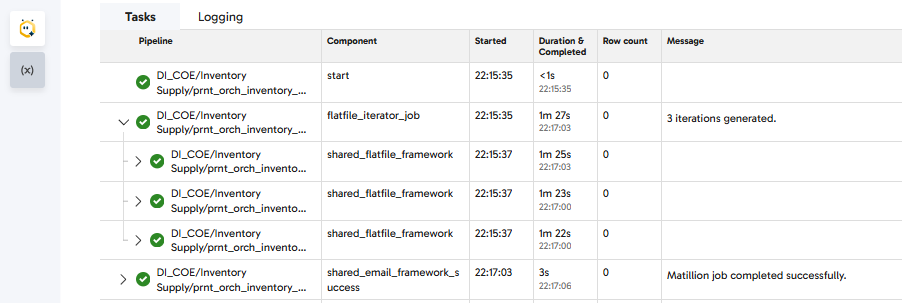
Figure 19: Execution results from Matillion task run history of parent pipeline.
Prompt 4.1: Zero Rows Returned or NO Metadata Found
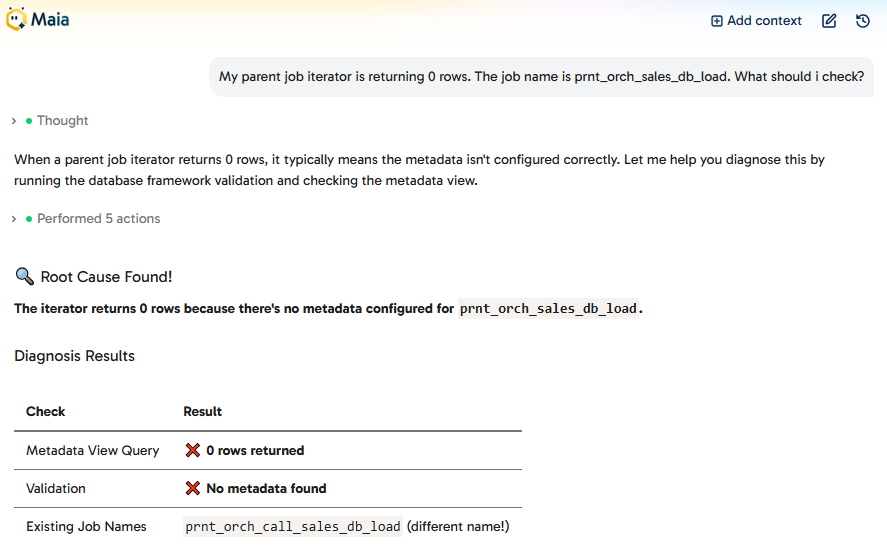
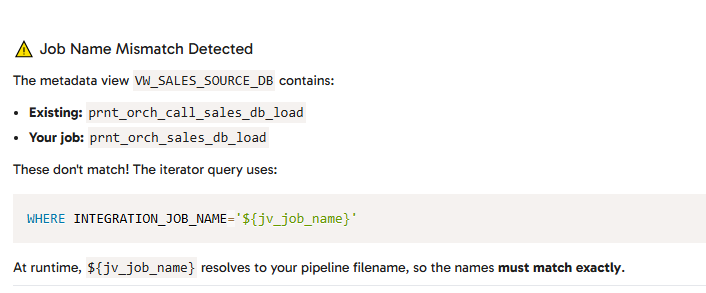
Figure 20: Maia response for troubleshooting zero rows and no metadata issue.
Prompt 4.2: Load Type Issues


Figure 21: Maia response for troubleshooting upsert load failing issue.
Important: Maia cannot directly modify metadata. These prompts help you understand what to change in the Excel files. After updating, upload to S3 and run orch_master_metadata_tables_load.
Prompt 5.1: Add Tables to Existing pipeline
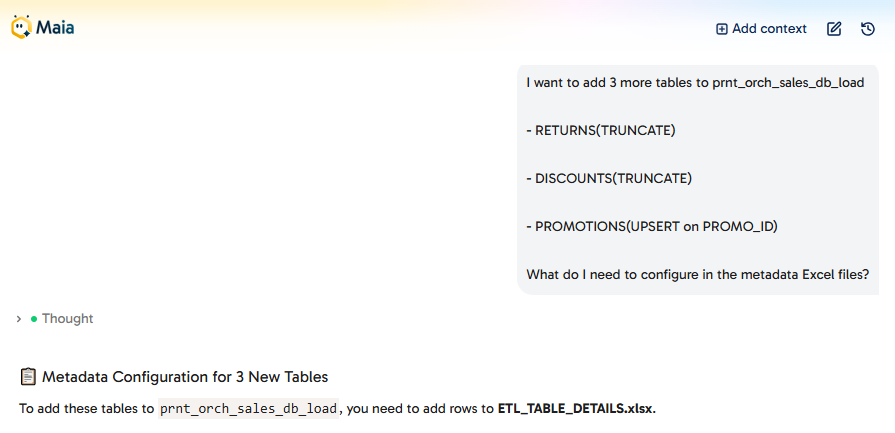
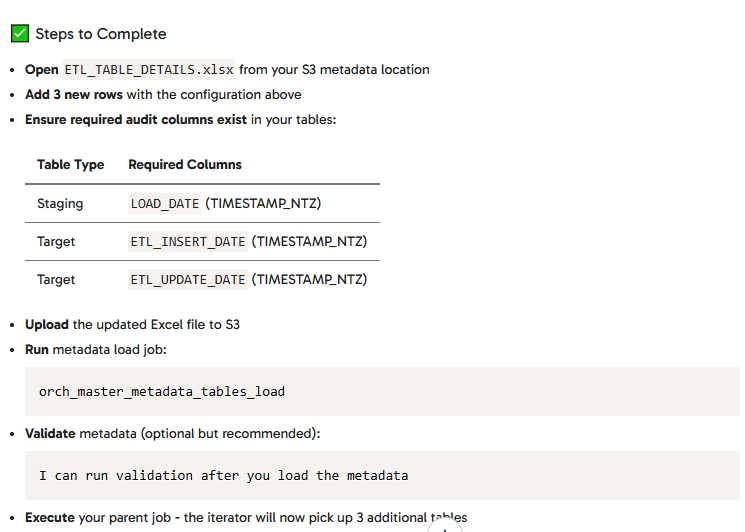
Figure 22: Maia prompt and response for modifications to the existing pipelines
Prompt 6.1: Asking Maia for generating documentation of a pipeline.
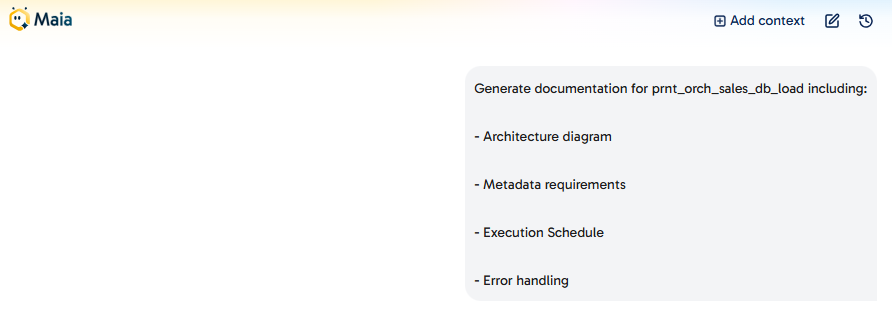


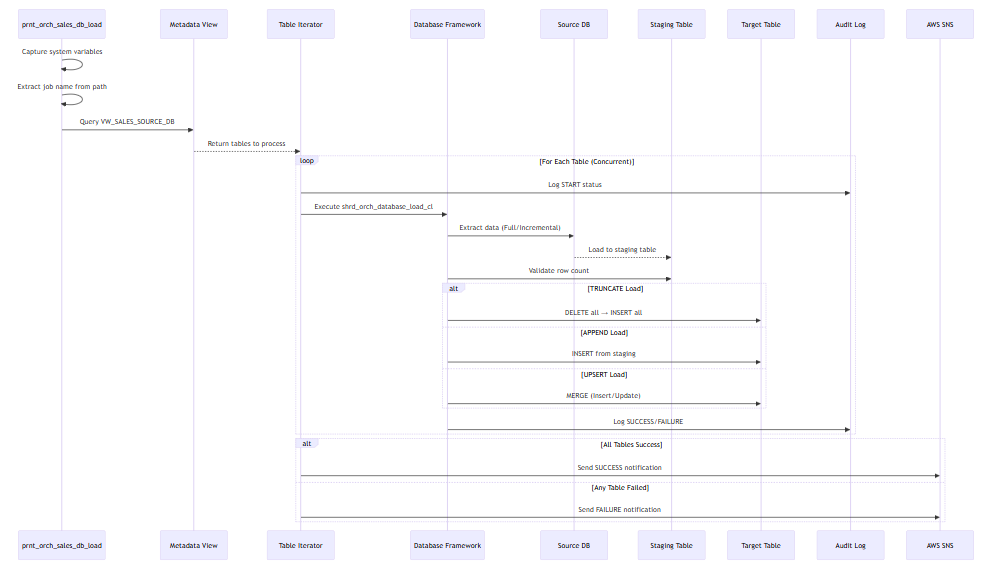

Figure 23: Maia response for document generation of a pipeline.
| Metric | Before Framework | With Framework + Maia | Improvement |
|---|---|---|---|
| Development Time | 1-2 weeks | 2-4 hours | 85-90% faster |
| Onboarding | 1-2 weeks | 2-4 hours | 95% faster |
| Error Rate | 15-20% | 2-3% | 80% reduction |
| Code Standardization | Inconsistent, Developer dependent | Framework enforced standards | Consistent and governed implementation |
| Developer Productivity | 10 tables/week | 50-100 tables/week | 5-10x increase |
| Maintenance Overhead | High | Low | 70% reduction |
Conclusion
The combination of our metadata-driven framework and Maia AI has fundamentally changed how we build data pipelines. What once took weeks/days now takes minutes. What required expert developers now requires simple configuration.
The future of data engineering is: