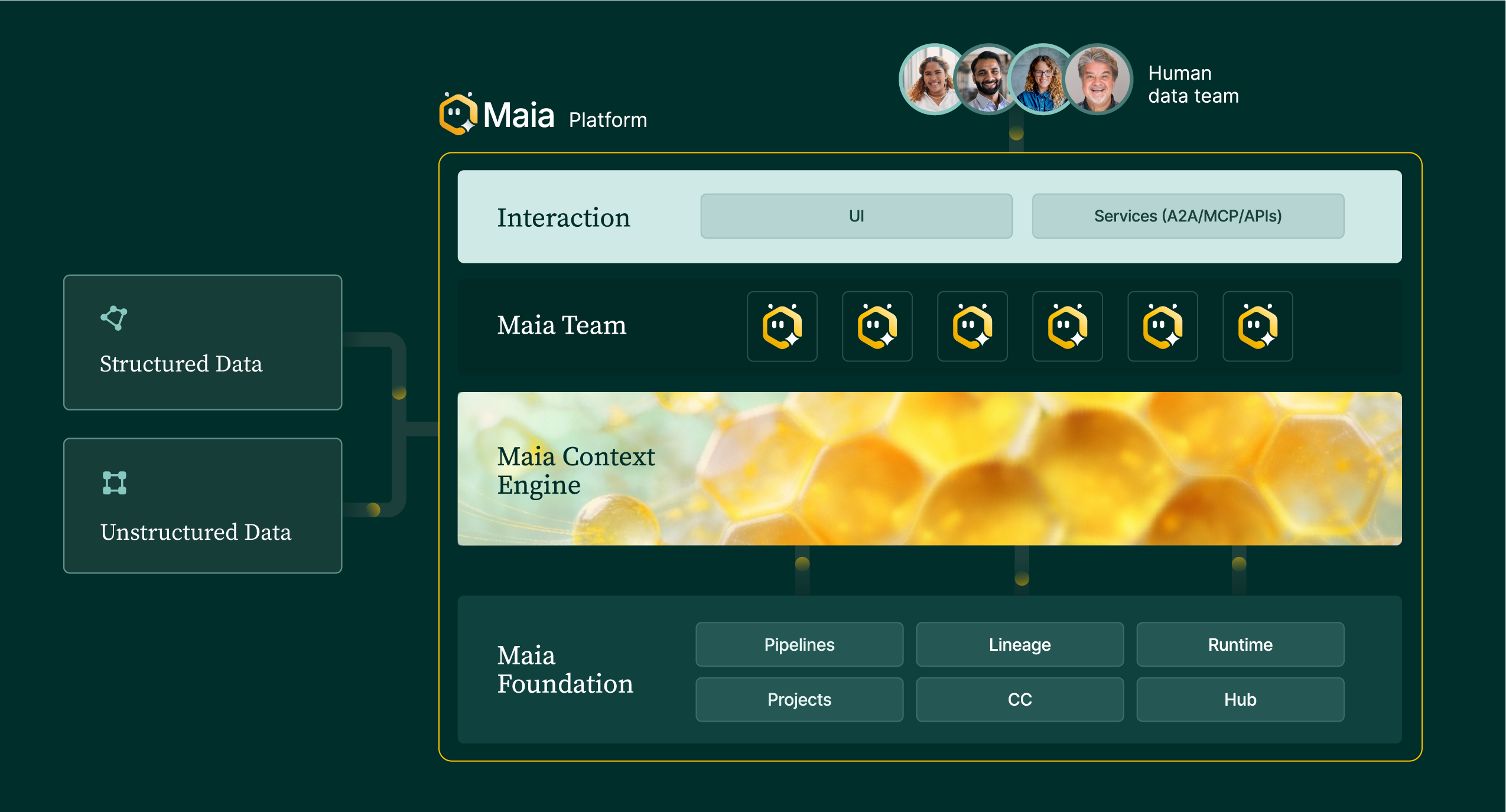
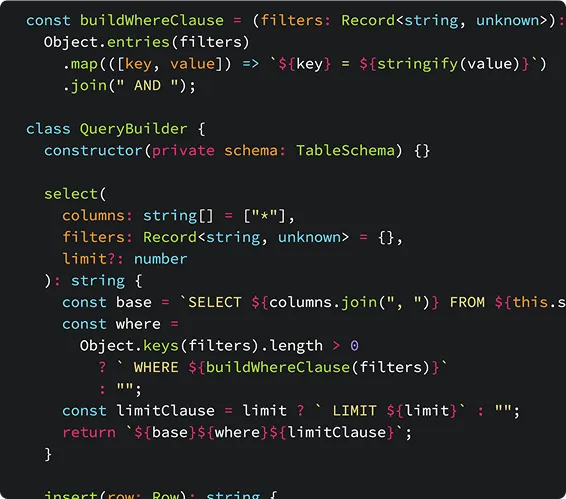
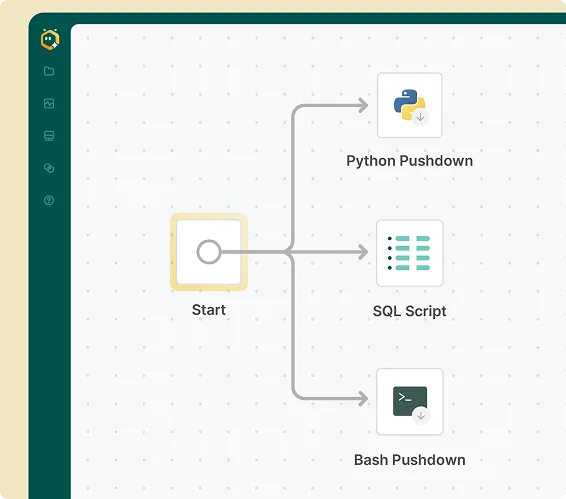
Maia Context Engine transforms institutional knowledge into a living system that Maia Agents can reason against.
It automatically encodes semantic definitions, metadata relationships, policy constraints, and tribal knowledge into a continuously evolving knowledge graph for agentic execution.
By connecting business meaning to physical schema structure, the graph allows agents to reason across both technical and semantic layers. When pipelines are generated, lineage remains aligned, documentation stays synchronized, and outputs reflect both business definitions and structural dependencies.
The result is not just smarter execution — it is traceable, explainable automation.
Business definitions & documentation
Authoritative definitions, KPIs, standards
Compliance & policy requirements
Governance rules and contraints
Lineage across transformations
Upstream and downstream dependencies
Table & column relationships
Structural relationships and joins
Warehouse metadata
Schema, types, contraints
Autonomous incident response timeline
A living knowledge graph, not static documentation
As pipelines are human-reviewed, adjusted, and promoted, the knowledge graph updates automatically to ensure that approved standards are enforced for future builds.
Over time, organizational tribal knowledge becomes documented and durable.
Context that constrains execution
The Context Engine does more than describe your data. It enforces how it should be used. Modeling conventions, naming standards, policy rules, and architectural patterns are directly embedded into agentic execution. If definitions change, enforcement changes with them automatically. Consistency becomes structural, not dependent on manual review.
Reliable autonomy requires context.
Maia Context Engine ensures that your organizational data context is documented and enforced for your agentic data engineering workforce.