











Data management
made effortless
Enjoy the freedom to do more with Maia on your side.
Webhooks are automated messages sent from apps when an event occurs. They allow real-time data transfer between systems by sending payloads to specified URLs. This reduces polling needs, increasing efficiency and saving resources. Commonly used in APIs, they enable seamless interactions between different platforms, providing rapid integrations and enhancing overall user experience by allowing systems to automatically react to specific triggers.
Key metrics and data analytics from Webhooks data include event frequency, response time, success and failure rates, and payloads sent. Analyzing these metrics helps monitor integration performance, optimize response efficiency, and troubleshoot issues. Trend analysis and anomaly detection can uncover patterns in data flow, enabling data-driven decisions to enhance application interconnectivity and improve overall system reliability and performance.
Maia simplifies data access via a no-code Webhooks connector and enhances productivity, collaboration, and speed, empowering teams to efficiently build scalable AI and analytics pipelines.

For the quickest response to support issues, please visit the support portal.
With our connector to Webhooks, you can quickly and easily move data into your cloud data warehouse.
Choose from Matillion's extensive library of prebuilt-connectors to get the data you need into your cloud-data platform, where you can transform and prepare it for analytics or AI projects
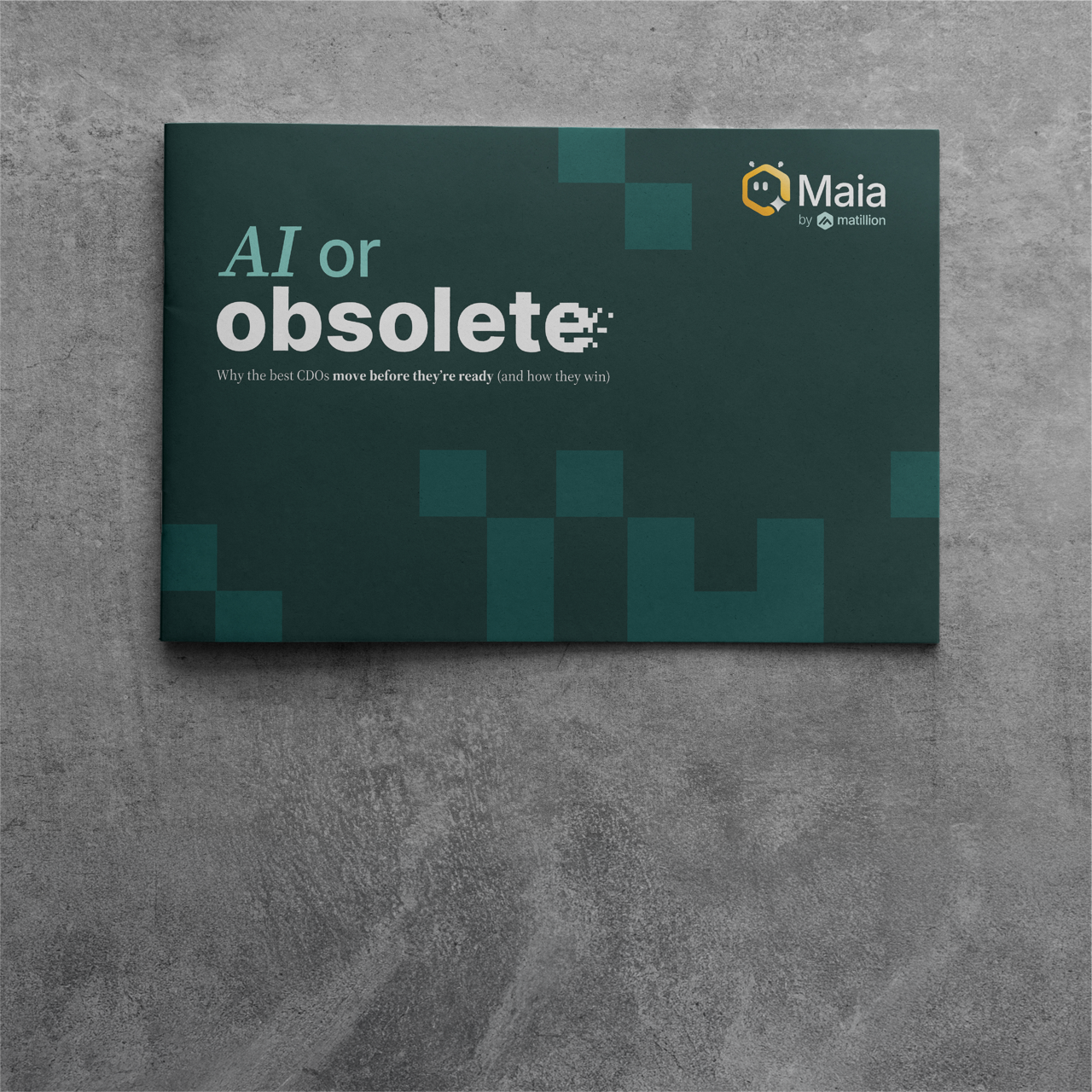
The gap between CDOs moving now and those still waiting is compounding daily. The constraint on AI value was never the models; it's how fast you can supply them with governed, AI-ready data. This executive guide shows how the CDOs already ahead get there: a proven pilot, a funded business case, and a board-ready plan to scale, in 90 days.

80% of AI POCs stall before production — not from bad use cases, but an unresourced supply side. Here's the five-stage leakage chain, and how to close it before your board notices.