








Data management
made effortless
Enjoy the freedom to do more with Maia on your side.
PayPal is a widely-used online payment system that facilitates secure transactions and money transfers via the internet. It allows users to link their credit cards or bank accounts for seamless, efficient payments, ideal for online shopping and business transactions. PayPal enhances security by encrypting financial information and offers buyer protection, making it a trusted choice for both individuals and businesses globally.
Using PayPal data, key metrics include transaction volume, average transaction value, and customer retention rates. Analytics enables trend analysis, spending pattern identification, and customer segmentation. Businesses can track revenue growth, assess fraud risk, and analyze geographical distributions. Furthermore, customer satisfaction can be gauged through complaint analysis and feedback reviews, while machine learning can predict future transaction behaviors and optimize payment processes.
Maia amplifies productivity and collaboration by providing a pre-built, code-optional connector to PayPal for swift data access, enabling data teams to efficiently construct and manage pipelines at scale for AI and Analytics.

For the quickest response to support issues, please visit the support portal.
With our connector to PayPal, you can quickly and easily move data into your cloud data warehouse.
Choose from Matillion's extensive library of prebuilt-connectors to get the data you need into your cloud-data platform, where you can transform and prepare it for analytics or AI projects
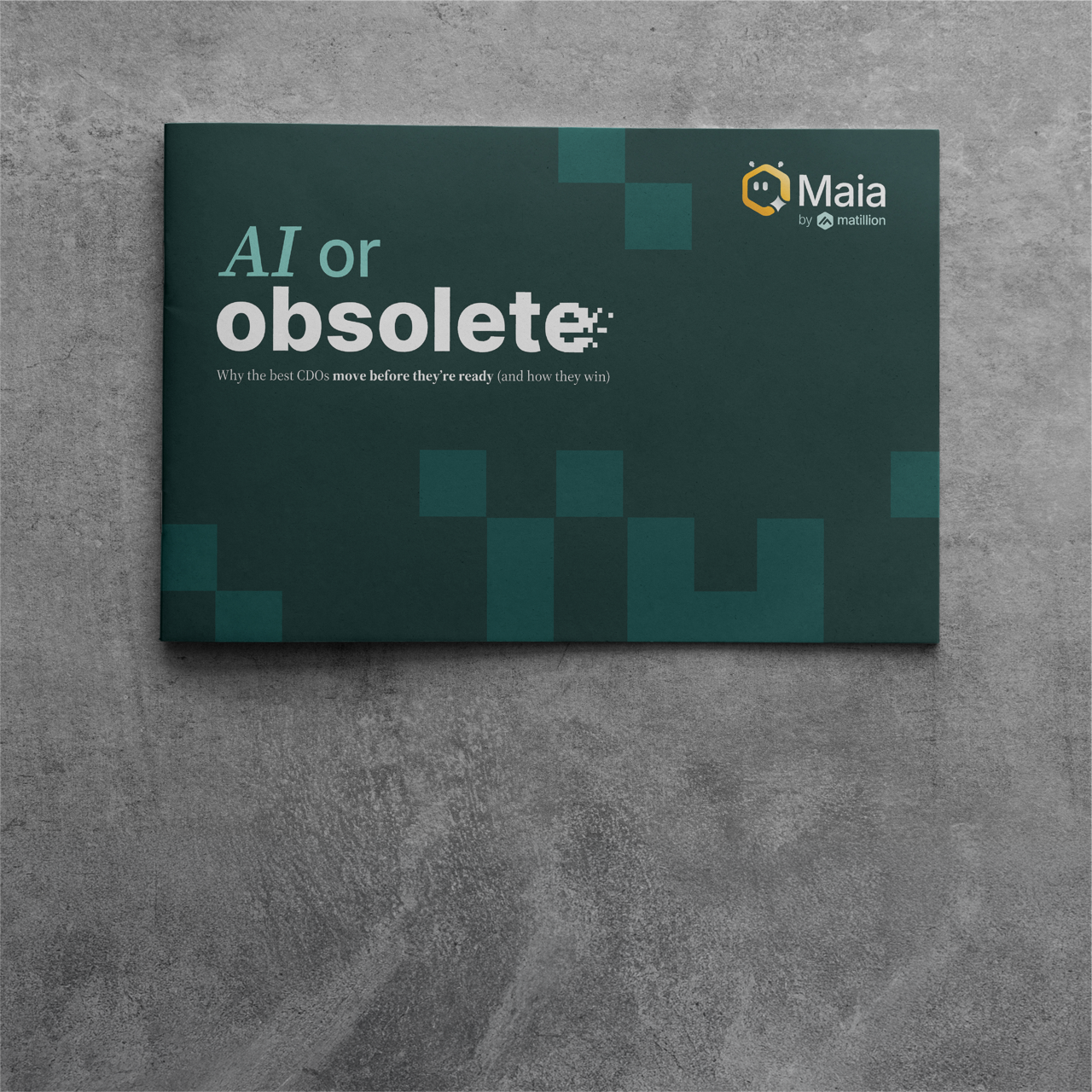
The gap between CDOs moving now and those still waiting is compounding daily. The constraint on AI value was never the models; it's how fast you can supply them with governed, AI-ready data. This executive guide shows how the CDOs already ahead get there: a proven pilot, a funded business case, and a board-ready plan to scale, in 90 days.
80% of AI POCs stall before production — not from bad use cases, but an unresourced supply side. Here's the five-stage leakage chain, and how to close it before your board notices.