
Data management
made effortless
Enjoy the freedom to do more with Maia on your side.




.jpg)
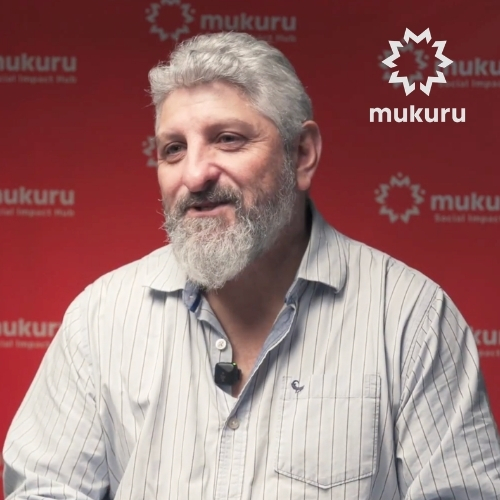
Mukuru’s data engineering team builds the models that power reporting across the business. Their mission, in Data Engineering Manager Paul Hansen’s words: make sure customers can trust the platform to get their money where it needs to go. When a HubSpot marketing integration stalled for weeks on their legacy ETL tooling, they tried Maia Foundation as a test case. It was working within two hours.
That single result was enough to convince Mukuru to migrate its entire data estate to Maia. With that migration underway, Mukuru is betting the same shift plays out everywhere else data slows the business down: less time maintaining pipelines, more time on the work that keeps customer trust in the platform intact.
Mukuru is an African-born fintech company built around a single mission: get money across borders and into the hands of the people who need it. “Sometimes the difference between our customers using Mukuru and not using Mukuru is whether a family will have a meal to eat tonight or not,” says Paul Hansen, Data Engineering Manager at Mukuru. “That is essentially our mission.” Delivering on it depends on data the business can trust, and Hansen's team builds the pipelines that feed the models powering reporting across the business.
That trust is harder to maintain on a legacy stack.
Mukuru's data team was running Matillion ETL, the tool that had built those models for years. One integration made the cost of staying on it hard to ignore: the marketing team needed data flowing from HubSpot, their CRM, and getting it working was taking weeks with no resolution in sight.
“We were faced with a bit of a challenge in that the Matillion ETL tooling that we were using at the time could not really provide the solution we were looking for. Our developers had been going backwards and forwards trying to get the solution working, and I had spent approximately three to four weeks on it already. It was quite frustrating for them at the time.”
— Paul Hansen, Data Engineering Manager, Mukuru
With the HubSpot integration still stuck, Mukuru’s team decided to try the same problem in Maia Foundation.
“We then decided to give Maia Foundation a try. Much to our surprise, we were able to solve that problem within an hour or two, where it had previously taken quite a long time with the existing Matillion ETL tool.”
— Paul Hansen, Data Engineering Manager, Mukuru
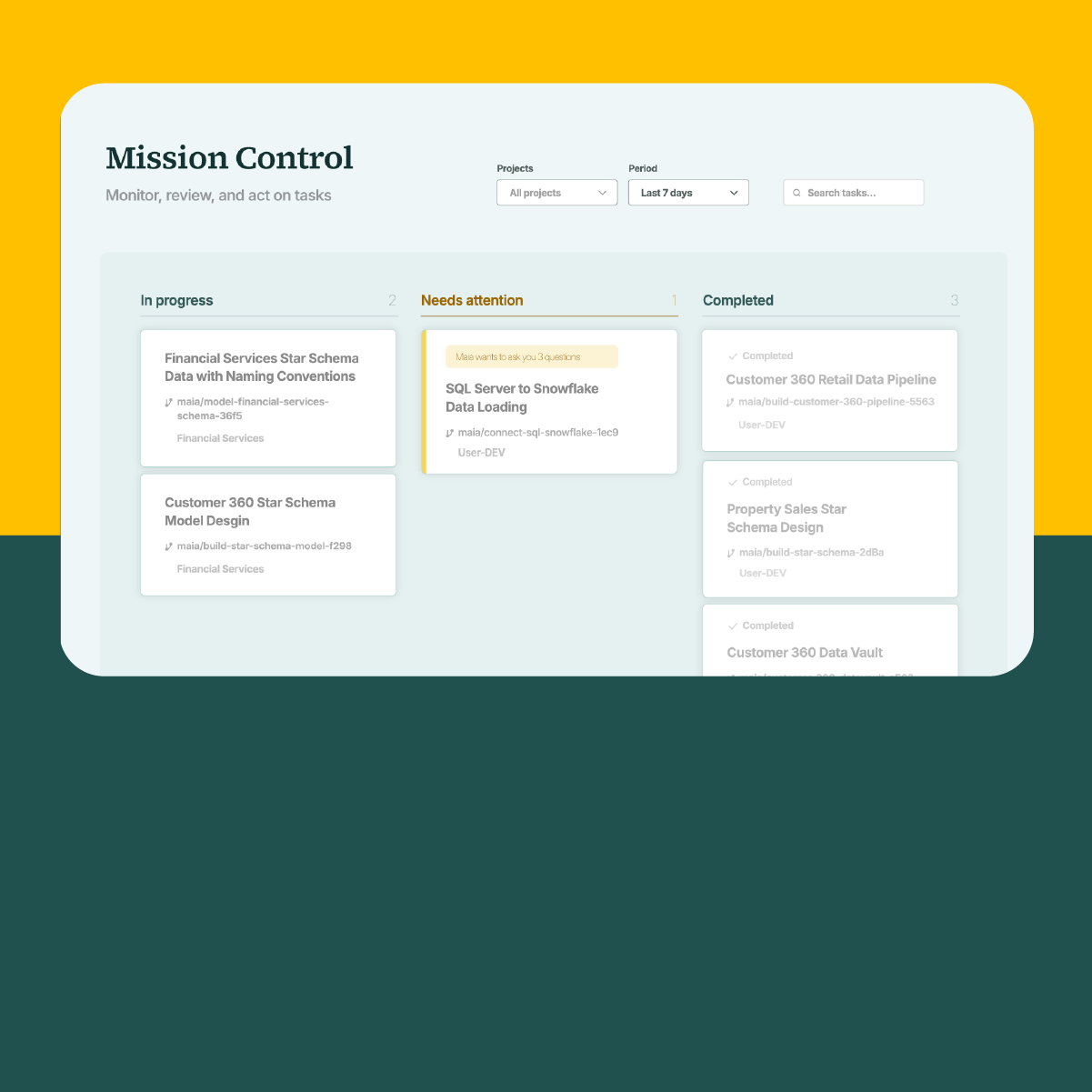
On the old stack, weeks of developer time had gone into fighting tooling rather than building. That friction disappeared with Maia: Maia Team agentically built the pipeline and created the connector. Hansen describes his first login as immediately familiar: a canvas for development alongside a prompt interface, built on the same underlying platform his team already knew.
“It followed the rules of ‘don’t make me think.’ I was able to navigate quite freely. It was one of the earliest AI-based tools I had used, and I was really blown away by how intuitive it was for a user to get around.”
— Paul Hansen, Data Engineering Manager, Mukuru
This is the shift agentic AI is making possible across data teams. Junior engineers can rapidly upskill, taking on work that used to take years of experience to tackle. Winnie Mazarire was an intern at Mukuru when she took on exactly that kind of build: a pipeline pulling bookings, worklogs, users, and project data from multiple accounts for operational reporting. Maia built it autonomously; Winnie directed and reviewed the work. She’s since become a Junior Data Engineer on the team.

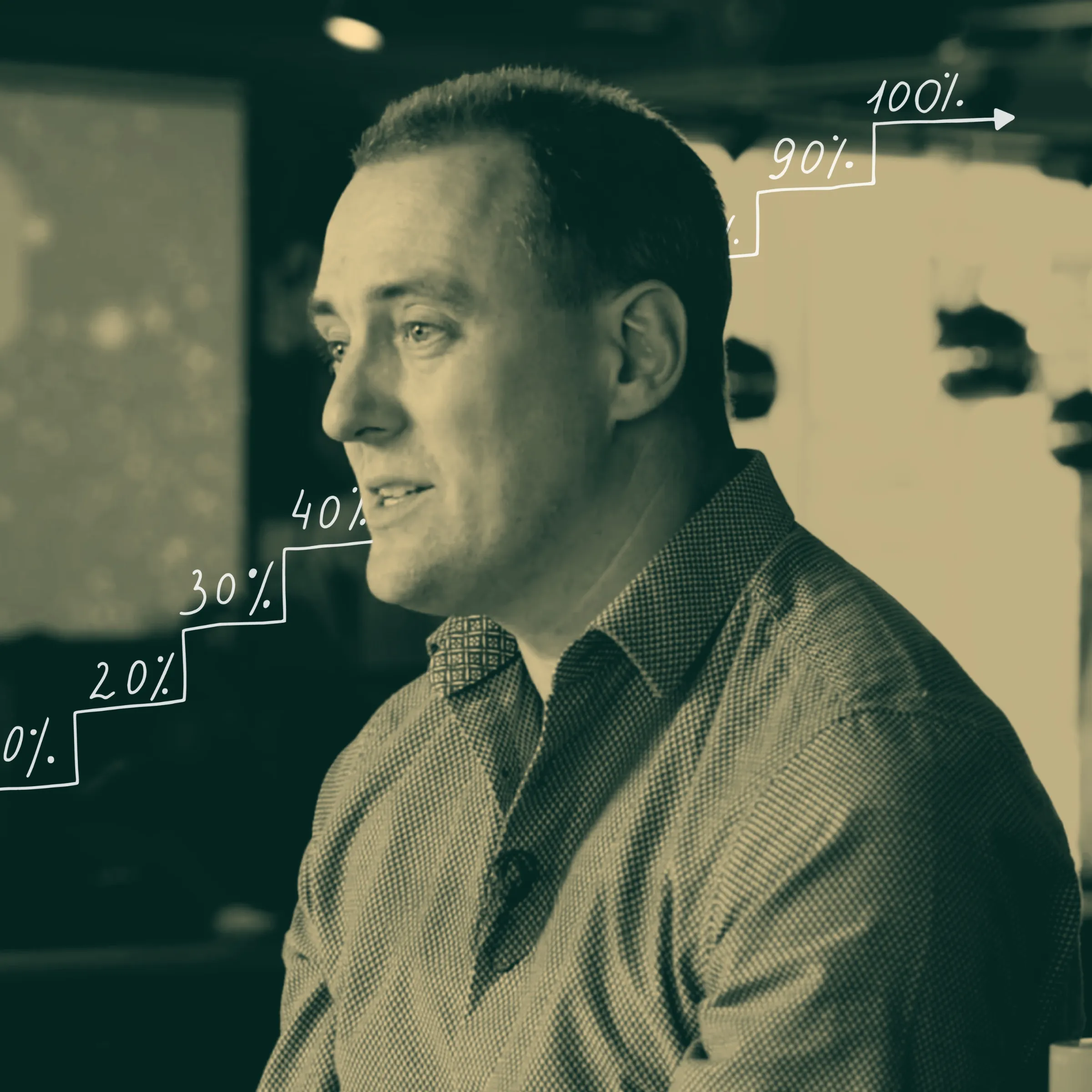
What had taken three to four weeks on the old stack took one to two hours on Maia. Hansen describes that as part of a bigger pattern: efficiencies the team didn’t expect going in.
“The new approach with Matillion and the Maia Foundation product has really unlocked efficiencies in a surprising way, beyond our expectations.”
— Paul Hansen, Data Engineering Manager, Mukuru
That efficiency didn't come at the expense of trust. Mukuru moves money for people who depend on it landing safely, so any AI tool touching data close to customers still had to clear a higher bar before the team would adopt it.
"There was understandably some initial caution around adopting AI tooling in a data environment, particularly from a privacy perspective. We needed to understand how data would be handled and what safeguards were in place before becoming comfortable with the technology."
— Paul Hansen, Data Engineering Manager, Mukuru
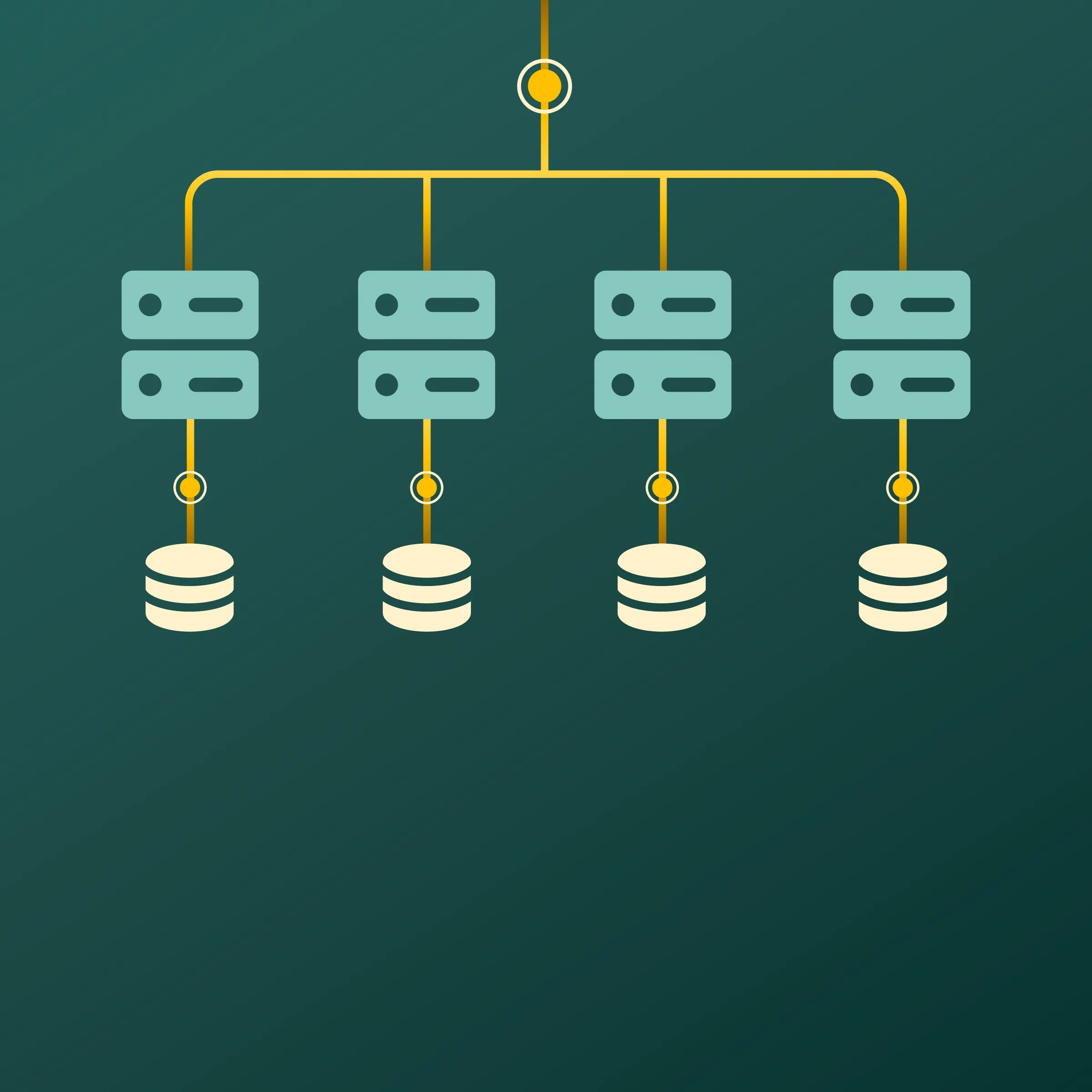
Maia runs on pushdown execution: all processing happens inside Mukuru’s own cloud environment, so customer data never leaves their perimeter and is never used to train Maia’s models. Those are the safeguards that got the team comfortable.
“I, for one, was never concerned about data privacy or data being leaked to foundation models for training. I felt secure throughout my first journey with Maia Foundation.”
— Paul Hansen, Data Engineering Manager, Mukuru
One solved integration was enough evidence for Mukuru to commit further.
“The next step for Mukuru, having realised how many efficiencies it unlocks, is to migrate entirely from Matillion ETL into Maia Foundation.”
— Paul Hansen, Data Engineering Manager, Mukuru
Hansen's advice to other data leaders reflects that same conviction: treat AI adoption as inevitable, not optional. “It is a human-enabling tool… We are not going to get away from AI tooling. It is here to stay.”
He expects the payoff of embracing Maia to compound across both data engineering and analytics engineering teams. What makes that possible is Maia Context Engine: it retains what the team has already built, so the next pipeline doesn't start from zero.
“It is no longer going to be a case of starting everything from scratch. The context that we can store inside Maia, and the learning or training that we can provide it, is going to make a massive change to our team and seriously unlock efficiencies.”
— Paul Hansen, Data Engineering Manager, Mukuru
For Mukuru, those efficiencies lead to something bigger than the team itself: strengthening and protecting the mission.
“Mukuru is a customer-first application. That means we want to establish trust and reliability in the platform so that when our customers send money home, it is received by the people who need it most in that moment.”
— Paul Hansen, Data Engineering Manager, Mukuru

.jpg)
.jpg)





.png)








.png)




.png)


%20(1).png)
.png)


.png)




.png)
















.webp)





















.jpg)









.png)
.png)
.jpeg)
.png)
.png)
.jpeg)
.png)

.png)
.png)
.png)

.avif)

.jpg)

.jpg)
.png)
.jpeg)